
The e-bike parking rebellion: Have rental companies taken over our pavements?
Urban cycling | Accessibility | Controversy
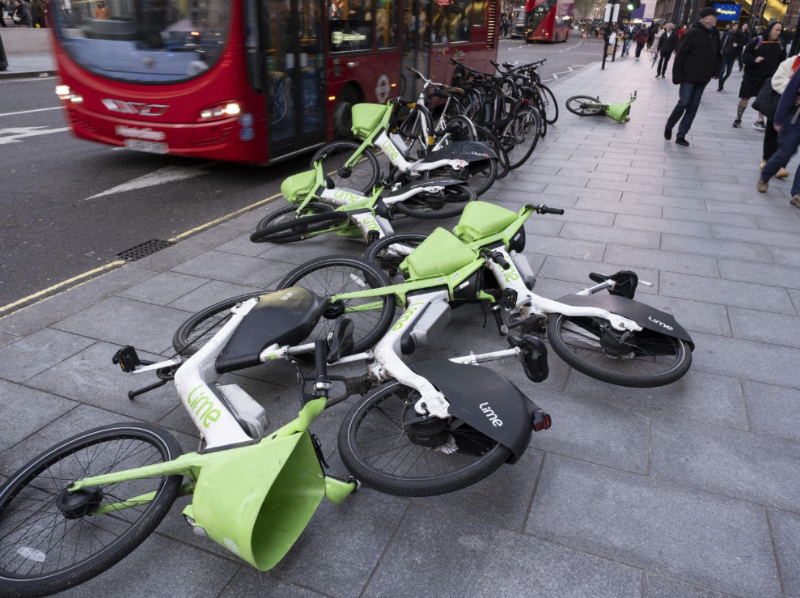
Electric-bike rental schemes were supposed to help transform urban transport, offering an inexpensive alternative to short car journeys. Instead, in some parts of Britain, they have become a source of growing frustration for pedestrians, particularly wheelchair users, parents with pushchairs and people with impaired vision.
The Government has now proposed new national standards for shared cycling schemes, potentially giving local authorities stronger powers to license operators, control parking and tackle antisocial behaviour. The consultation, announced on 5 November, covers companies such as Lime, Voi, Beryl, Dott, Forest and Bolt, with proposals including fleet limits, maintenance requirements, parking plans and potentially stronger insurance arrangements.
The accessibility argument is difficult to ignore. In a recent statement reported by Clarity News, the Royal National Institute of Blind People’s head of policy, Mike Wordingham, said that 92% of blind and partially sighted respondents reported having to enter the road because of street obstacles such as e-bikes. That figure concerns street obstacles and should not be interpreted as evidence that e-bikes alone caused every incident.
But banning or heavily restricting rental bicycles would create another problem. Shared electric bikes have introduced cycling to people who might never purchase or maintain a bicycle of their own. They can make commuting easier, reduce dependence on cars and provide a practical transport option where public services fall short.
The real question is whether operators should be permitted to occupy public space without accepting much greater responsibility for how their bicycles are parked and used. A bicycle abandoned across a pavement isn’t sustainable transport. It’s an obstruction, regardless of the environmental claims surrounding the business.
CyclingRebel believes the answer isn’t fewer cyclists. It’s better-managed cycling. Proper parking infrastructure, enforceable operator standards and consequences for irresponsible users should be part of the service, not optional extras introduced after complaints.
Electric bikes belong in our towns and cities. That doesn’t mean they belong wherever the last rider decides to leave them.